 Business License

YG026Electronic Fabric Strength Tester
【Scope of Application】:This instrument is used for the mechanical property testing of various textiles, including tensile strength, tearing strength, bursting strength, defined elongation, defined load, elasticity, stitch slippage, and peel strength. It is also widely used in the testing of mechanical properties such as tensile strength, compression, bending, adhesion, peel strength, tear strength, bursting strength, and creep for rubber, plastic, leather, metal, wire, paper, packaging materials, building materials, petrochemicals, electrical engineering, and geotechnical materials.
【Relevant Standards】:
The standards listed above are just a few examples, and some of their features require the purchase of specialized clamps and sensors, which must be chosen based on the specific application.
【Instrumental characteristics】:
1. It has automatic positioning of the holder and automatic marking of the position of the replacement holder, without the need for manual marking.
2. By limiting the closing air pressure and closing speed of the clip, it can automatically detect whether the pneumatic clip has abnormal action behavior, reduce human error, and effectively reduce the risk of the pneumatic clamp biting the finger. 3. TEDS sensor automatic identification function, after replacing the sensor instrument can automatically identify the range and automatic correction in the software background.
4. Various grippers can be customized to suit different materials and test standards. 5. The machine comes with hundreds of test procedures, with a huge preset test method library, which can meet the most commonly used GB, FZ, AATCC, ASTM, ISO, JIS, EN and MS, LTD standards.
6. Booted operation steps make the operation simpler and more convenient.
7. Standard customization, parameter customization, process customization, result customization, and report customization can be implemented.
8. Test reports are presented in a variety of ways (scatter chart, curve chart, raw data, etc.).
9. It has powerful calibration and inspection support.
10. It can realize the state in service, failure and so on.
11. There are multiple test unit systems to choose from.
12. The user interface design is humanized. When power is on, it indicates the status and failure of the equipment.
13. Beams lower and lower limit range, overload protection, overpressure, overflow, overheating, low pressure, low flow, automatic protection, emergency switch manual protection, etc.
14. Ambient light display effect, Voice broadcasting capability
15. Optional high-precision optoelectronic or contactless video extender
16. Optional pneumatic switchable film clip, More than 100 kinds of gripper can be selected, and can be customized according to customer material.
17. Test data can be copied directly from the instrument U disk, more conducive to a variety of site test environment requirements.
【Hardware Design】:
1. The machine frame is designed to last for over 30 years, featuring a robust and rigid frame constructed from high-strength materials. It includes pre-loaded bearings, precision ball screws, reinforced beam sections, and a sturdy base beam, along with a tension setting for the drive belt that minimizes the energy stored during the testing process, thereby enhancing the overall test performance and enabling more accurate measurements of modulus and strain.
2. The advanced, precisely aligned and bendable guide rails are specifically designed for executing axial tests. Only systems equipped with stable, precise guide rails can provide accurate stress and strain results, ensuring that the lateral forces exerted on the specimen during loading are minimized.
3. Enhanced, high-performance servo control system with increased reliability. The powerful servo motors enable faster acceleration during the initial phase of a test and quicker cycle times during repetitive trials. The dual belt system allows the ball screws to maintain synchronized movement, prevents the beam from tilting, facilitates system alignment, and ensures precise positioning.
II. Seventh-generation digital signal processing (DSP) control technology based on embedded systems
1. High-speed, low-vibration AC servo drive system imported from Japan, with a high-resolution digital closed-loop controller.
2. Modular design, multi-channel data acquisition and analog output module, open data management, can achieve load, deformation, displacement, speed detection control. 3.The high-precision imported load sensor adopts high-precision 24bits A / D, sampling frequency 2000Hz, and the maximum resolution of the whole force is 1 / 1,00000.
4. Equipped with a mobile control box, it can be easily moved or mounted on the rack, displays the working status of the stand, and can provide the required control keys during the test control process, positioning touch buttons and precision positioning wheels, which can efficiently move the vehicle, and the fine tuning can be precise to 0.1 mm.
5. The main control box is two-way controlled with the computer, and a precision switch is configured to fine-tune the distance and time after special requirements.
6. Humanized opening pneumatic clamp: In order to ensure that the material clamp must be vertical and central, the opening pneumatic grip can be completely inserted into the top and bottom clamp, and artificial intervention is carried out vertically before clamping, so as to prevent the improper clamping causing the material clamps to break or the force value to be inaccurate.
【Technical parameters】:
1. Test method: according to the internationally preferred equivalent speed elongation (CRE) principle
2. Force sensing system: high-precision force sensing sensor
3. Force sensing range: 1% to 100% of full range, Full scale 2500 N, degree value 0.1N
4. Clamping methods: manual clamping, pneumatic clamping
5. Measuring accuracy: ≤ ± 0.2% F · S
6. Clamping distance: automatic positioning, Digital setting
7. Clamping distance adjustment accuracy: ± 0.1mm
8. Speed control system: AC servo speed control system
9. Stretching speed: (0.001 ~ 1000) mm / min digital speed control,Error ≤ ± 1% 10. The maximum stroke of the instrument: 600mm
11. Specifications: single-arm desktop
12. Elongation resolution: 0.001 mm
13. Sampling frequency: 2000 times / sec
14. Use of power:AC220V ± 10% 50Hz 1kW
15. Dimensions: 540 (L) × 450 (W) × 1435 (H) (mm)
16. Weight: 75 kg
17. One set of universal pneumatic clamps, one set of clamps

Recently Posted
-
Why do disposable diapers need to be tested with professional testing instruments?
August 23, 2025I. Limitations of subjective assessment1.1 Uncontrollable factors in manual testingTraditional manual testing methods have many limitations:Inconsistent testing conditions: The temperature, volume, and pouring speed of the liquid are difficult to standardize in each test.Subjective result judgment: Different personnel have different judgment criteria.Difficult to quantify data: It is impossible to provide precise numerical evRead More -
Domestic vs. Imported Electronic Tensile Testing Machines: Performance Comparison and Cost-Effective
August 22, 20251. Brand Comparison: Technological Heritage and Market LandscapeImported Brands: Examples include Instron, MTS, and Zwick/Roell, which have long dominated the high-end market with a rich history and deep technological heritage. Their products are known for high precision and stability, particularly excelling in fields such as aerospace and cutting-edge scientific research. However, prices are generally high, often two times oRead More -
From Beginner to Expert: Daily Calibration and Error Compensation Techniques for Electronic Universa
August 21, 2025I. Why is Calibration So Important? The Chain Reaction of Errors:A 0.5% force value error can lead to a >20% deviation in fatigue life prediction (ASTM E739 data).Case Study: A spring factory failed to calibrate promptly, resulting in a batch of products exceeding stiffness standards and incurring losses of ¥800,000.Mandatory Standards:ISO 7500-1 stipulates: Class 1 equipment requiresRead More -
Electronic Tensile Tester Selection Guide: 5 Easily Overlooked Key Parameters
August 20, 2025I. Range Selection: Bigger Isn't Always BetterGolden Ratio Principle:Routine test forces should fall within 10%-90% of the range (ASTM E4 requirement)Case: A testing lab purchased a 100kN machine for 5N wire tests, resulting in ±8% error (3x over-limit)Multi-Range Solutions:Test TypeRecommended RangeAccuracy RangeTextile fibers0.5-500N±0.5%Automotive wires1-10kN±0.8%Metal materials10-300kN±1.0%Smart Sensor Tech:Zwick RoelRead More

Contact Us
Recommended Products
-
 YS080B Geomembrane Hydrostatic Pressure Tester (Hydraulic)US$ 6500.00 - 13000.00MOQ: 1 Unit
 -
YS020C Geotextile Vertical Permeability TesterNegotiableMOQ: 1 Unit
-
YS-300TC Coating Finishing Sample MachineNegotiableMOQ: 1 Unit
-
YG021Electronic Strength Tester for Synthetic FilamentUS$ 5400.00 - 10800.00MOQ: 1 Unit
-
Y172 Fiber Microtome (Hertel Type)US$ 180.00 - 400.00MOQ: 1 Unit
-
YG020 Electronic Single Yarn Strength TesterUS$ 450.00 - 900.00MOQ: 1 Unit
-
YG171 Yarn Hairiness TesterUS$ 13000.00 - 36000.00MOQ: 1 Unit
-
YS-609A Yarn Abrasion Resistance TesterUS$ 12000.00 - 24000.00MOQ: 1 Unit
-
YG871Water Absorption Tester (Klemm Test Instrument)US$ 800.00 - 1600.00MOQ: 1 Unit
-
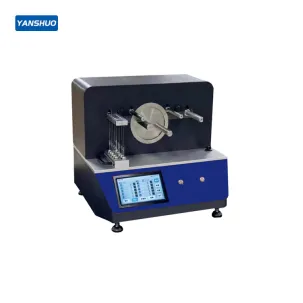
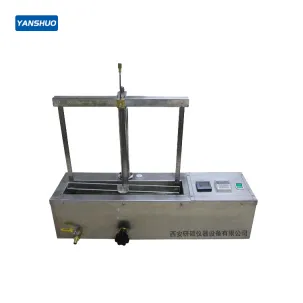
YG982D Fabric Pilling Rating BoxUS$ 3300.00 - 6600.00MOQ: 1 Unit
-
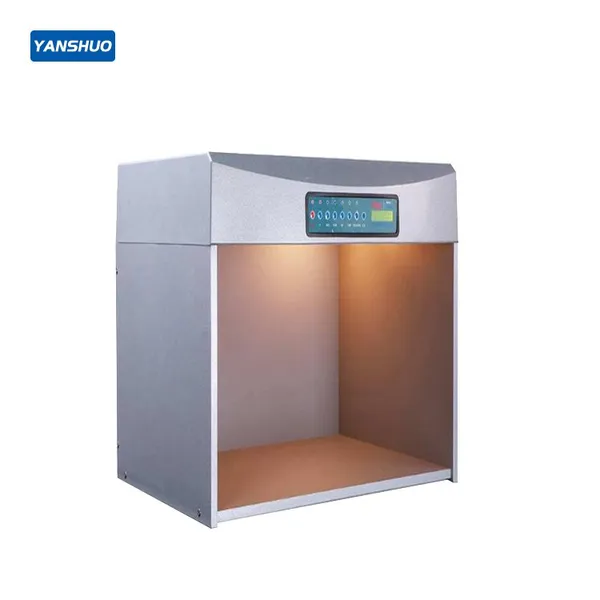
YG982C Standard Light Source Light Box (Six Sources)US$ 800.00 - 1600.00MOQ: 1 Unit
-
YG982B Standard Light Source Light Box (Five Sources)US$ 500.00 - 1000.00MOQ: 1 Unit
-
YS-503 Comprehensive UV Pre-Treatment Chamber (for Safety Helmets & Safety Nets)US$ 5200.00 - 10400.00MOQ: 1 Unit
-
Y171 Fiber CutterUS$ 190.00 - 360.00MOQ: 1 Unit
-
YS-AO/BO Vertical and Horizontal Pneumatic Electric Small Rolling MillUS$ 2100.00 - 4200.00MOQ: 1 Unit
-
YS-20-E Intelligent Pore Size TesterNegotiableMOQ: 1 Unit
-
YS-000 Muffle FurnaceUS$ 680.00 - 1360.00MOQ: 1 Unit
-
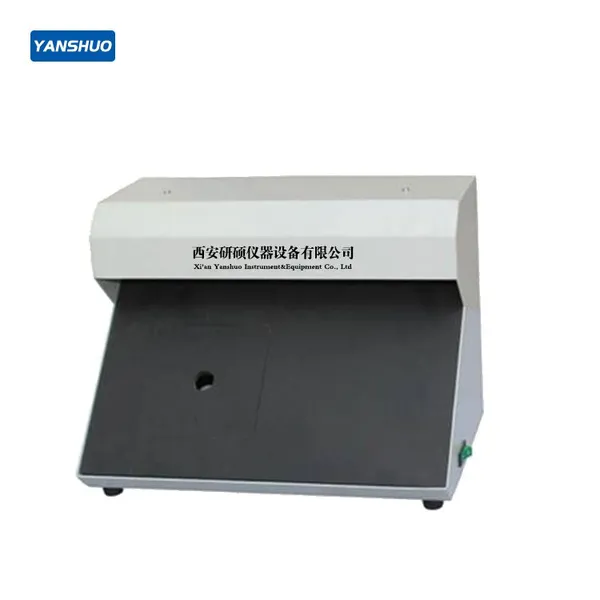
YS-212A Dark Box Ultraviolet AnalyzerUS$ 280.00 - 560.00MOQ: 1 Unit
-
YG201E Textile Formaldehyde Content TesterUS$ 2200.00 - 4400.00MOQ: 1 Unit
-
YS020S Geotextile Vertical Water Permeability TesterNegotiableMOQ: 1 Unit