 Business License

Why do disposable diapers need to be tested with professional testing instruments?
I. Limitations of subjective assessment
1.1 Uncontrollable factors in manual testing
Traditional manual testing methods have many limitations:
Inconsistent testing conditions: The temperature, volume, and pouring speed of the liquid are difficult to standardize in each test.
Subjective result judgment: Different personnel have different judgment criteria.
Difficult to quantify data: It is impossible to provide precise numerical evaluation indicators.
Low efficiency: It cannot meet the quality control requirements of large-scale production.
1.2 Complexity of actual usage environment
The usage environment of disposable diapers is highly complex:
Differences in urine volume and frequency among infants of different ages
Influences of various activity postures (crawling, rolling, standing)
Variations in wearing time
Differences in environmental temperature and humidity
These complex factors can only be standardized and simulated by professional instruments.
II. Irreplaceability of professional testing instruments
2.1 Provide objective and quantifiable data
Professional instruments can provide precise numerical indicators:
Slippage: Liquid residue measured to 0.1 mL
Re-entrainment: Reverse seepage under pressure conditions
Permeation time: Absorption speed measured in milliseconds
Diffusion length: Distribution of liquid in the core
2.2 Standardized testing conditions
Professional instruments ensure the consistency of testing conditions:
Temperature control: Maintain a constant temperature for the test liquid (usually 32 ± 1°C)
Precise flow rate: Precisely control the liquid addition speed
Standard pressure: Apply pressure according to specified pressure and time
Constant environment: Test in a standard temperature and humidity environment
2.3 Simulate real usage scenarios
Modern testing instruments can simulate various usage conditions:
Multi-angle testing: Simulate different postures such as lying, sitting, and standing
Dynamic testing: Simulate liquid distribution under movement
Multiple permeation: Simulate multiple urination situations
Pressure changes: Simulate different pressure states
III. Core testing items and instrument requirements
3.1 Absorption performance testing
Testing instruments: Slippage tester, permeation performance tester
Testing parameters: Initial absorption time, multiple absorption capacity, liquid diffusion range, absorption rate curve
3.2 Leakage prevention performance testing
Testing instruments: Side leakage tester, three-dimensional leakage prevention testing device
Testing parameters: Sealing performance of leakage prevention edges, three-dimensional protective effect, leakage prevention performance under different postures
3.3 Comfort testing
Testing instruments: Breathability tester, softness tester
Testing parameters: Breathability rate, material softness, friction coefficient, thermal and moisture resistance
Recently Posted
-
Domestic vs. Imported Electronic Tensile Testing Machines: Performance Comparison and Cost-Effective
August 22, 20251. Brand Comparison: Technological Heritage and Market LandscapeImported Brands: Examples include Instron, MTS, and Zwick/Roell, which have long dominated the high-end market with a rich history and deep technological heritage. Their products are known for high precision and stability, particularly excelling in fields such as aerospace and cutting-edge scientific research. However, prices are generally high, often two times oRead More -
From Beginner to Expert: Daily Calibration and Error Compensation Techniques for Electronic Universa
August 21, 2025I. Why is Calibration So Important? The Chain Reaction of Errors:A 0.5% force value error can lead to a >20% deviation in fatigue life prediction (ASTM E739 data).Case Study: A spring factory failed to calibrate promptly, resulting in a batch of products exceeding stiffness standards and incurring losses of ¥800,000.Mandatory Standards:ISO 7500-1 stipulates: Class 1 equipment requiresRead More -
Electronic Tensile Tester Selection Guide: 5 Easily Overlooked Key Parameters
August 20, 2025I. Range Selection: Bigger Isn't Always BetterGolden Ratio Principle:Routine test forces should fall within 10%-90% of the range (ASTM E4 requirement)Case: A testing lab purchased a 100kN machine for 5N wire tests, resulting in ±8% error (3x over-limit)Multi-Range Solutions:Test TypeRecommended RangeAccuracy RangeTextile fibers0.5-500N±0.5%Automotive wires1-10kN±0.8%Metal materials10-300kN±1.0%Smart Sensor Tech:Zwick RoelRead More -
New Energy Vehicle Wire Harness Testing: Precise Force Control with Electronic Tensile Testers in Hi
August 19, 2025I. Why High-Temperature Testing is Critical for NEV Wire Harnesses?Demanding Operational Conditions:Motor compartment temperatures can exceed 150°C Fast-charging currents cause wire temperature rise ΔT≥80°C (SAE J1128 requirement)Failure Risks:Failure ModeConsequenceIndustry CaseInsulation softeningShort-circuit ignition2023 recall due to wire harness meltingConductor creepContact resistance +30%5% charging efficiency loRead More

Contact Us
Recommended Products
-
 YS080B Geomembrane Hydrostatic Pressure Tester (Hydraulic)US$ 6500.00 - 13000.00MOQ: 1 Unit
 -
YS020C Geotextile Vertical Permeability TesterNegotiableMOQ: 1 Unit
-
YS-300TC Coating Finishing Sample MachineNegotiableMOQ: 1 Unit
-
YG021Electronic Strength Tester for Synthetic FilamentUS$ 5400.00 - 10800.00MOQ: 1 Unit
-
Y172 Fiber Microtome (Hertel Type)US$ 180.00 - 400.00MOQ: 1 Unit
-
YG020 Electronic Single Yarn Strength TesterUS$ 450.00 - 900.00MOQ: 1 Unit
-
YG171 Yarn Hairiness TesterUS$ 13000.00 - 36000.00MOQ: 1 Unit
-
YS-609A Yarn Abrasion Resistance TesterUS$ 12000.00 - 24000.00MOQ: 1 Unit
-
YG871Water Absorption Tester (Klemm Test Instrument)US$ 800.00 - 1600.00MOQ: 1 Unit
-
YG982D Fabric Pilling Rating BoxUS$ 3300.00 - 6600.00MOQ: 1 Unit
-
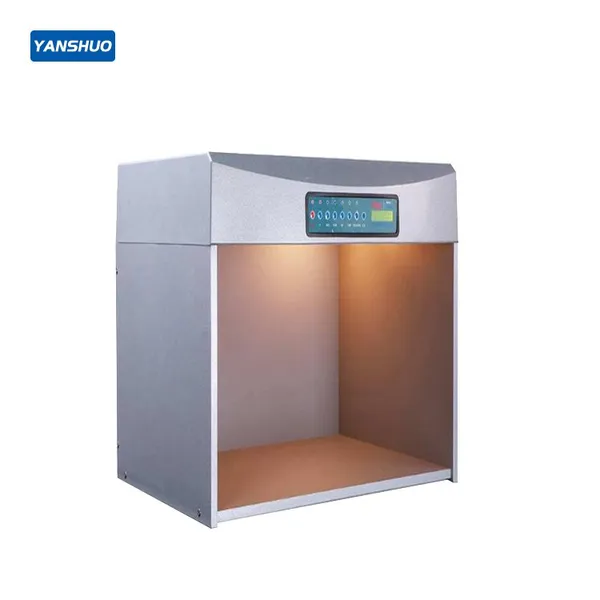
YG982C Standard Light Source Light Box (Six Sources)US$ 800.00 - 1600.00MOQ: 1 Unit
-
YG982B Standard Light Source Light Box (Five Sources)US$ 500.00 - 1000.00MOQ: 1 Unit
-
YS-503 Comprehensive UV Pre-Treatment Chamber (for Safety Helmets & Safety Nets)US$ 5200.00 - 10400.00MOQ: 1 Unit
-
Y171 Fiber CutterUS$ 190.00 - 360.00MOQ: 1 Unit
-
YS-AO/BO Vertical and Horizontal Pneumatic Electric Small Rolling MillUS$ 2100.00 - 4200.00MOQ: 1 Unit
-
YS-20-E Intelligent Pore Size TesterNegotiableMOQ: 1 Unit
-
YS-000 Muffle FurnaceUS$ 680.00 - 1360.00MOQ: 1 Unit
-
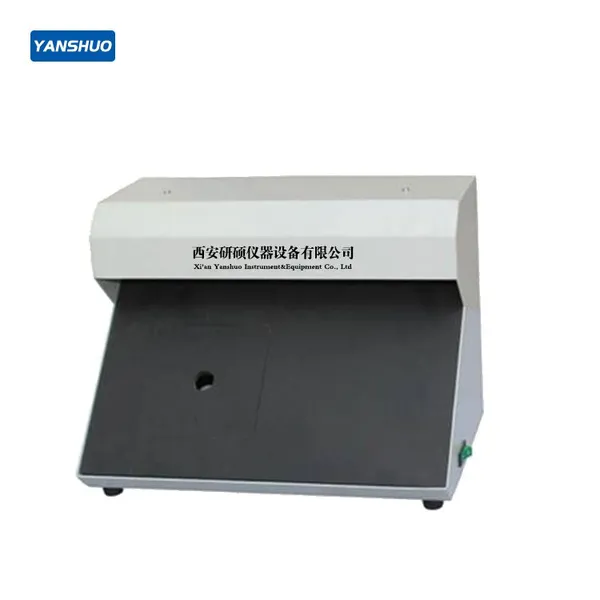
YS-212A Dark Box Ultraviolet AnalyzerUS$ 280.00 - 560.00MOQ: 1 Unit
-
YG201E Textile Formaldehyde Content TesterUS$ 2200.00 - 4400.00MOQ: 1 Unit
-
YS020S Geotextile Vertical Water Permeability TesterNegotiableMOQ: 1 Unit